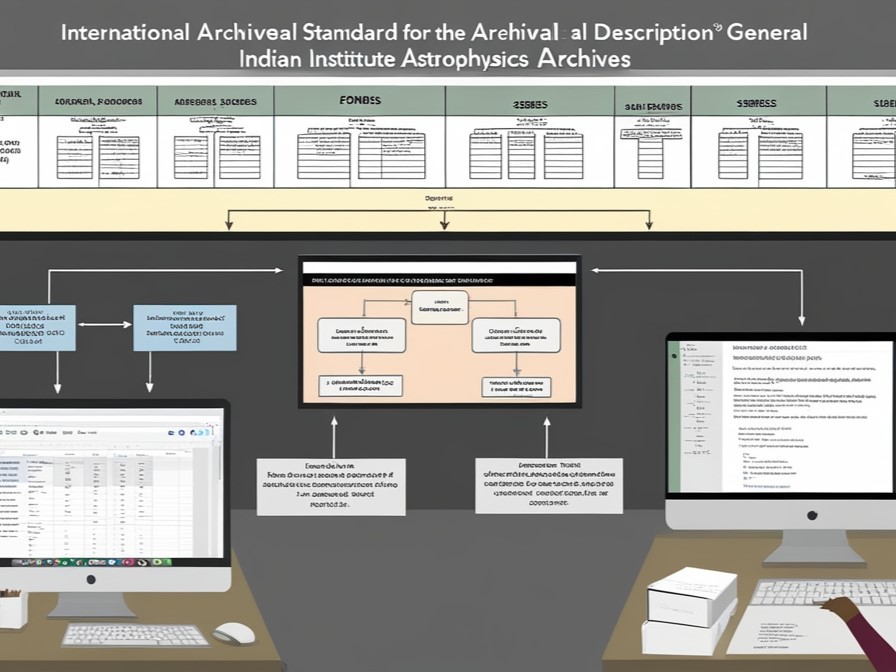

The International Standard for Archival Description General is used by the IIA Archives to describe records (ISAD [G]). The following headings outline the purposes of each element of an ISAD(G) description.Each fond has a fonds-level description, at the very least. Records may also be further structured inside each fond into subfonds in a hierarchical manner, which often represents organizational or authority divides within the institution or function. This fonds (or sub-fonds, if one already exists) may have a number of records that, in general, indicate events or record form. The part at the top of each entry for a description shows and explains this descriptive hierarchy.
- From the broad to the specific description
- Include details that are specific to that level of description.
- Make clear where the description unit sits in the fonds' hierarchy.
- Avoiding duplication of information at lower levels of description; instead, providing information at the highest level that is shared by the component elements.
- Links to record-level listings of the records organized in the series or sub-series are typically included in fonds detailed to the series or sub-series level.
Initially, learning about the various collections and their importance in the context of how records are created are important. Users will be able to better understand how the records were organised and who was in charge of the various functions, such as projects, inventions, policy development, development studies and research, evaluation, and so on, by reading the information in the archival description fields of the fonds and subfonds level descriptions.Users can further assess the relevance of records in fonds by reviewing the Scope & Content field after the document that was responsible for the actions or subjects they are interested in has been located. This information will be thorough but broader in situations where only a fonds-level description has been provided. Once a request has been made, review the fond-level Scope & Content information and utilize this information to direct the conversation with an archivist.Particular documents relating to the IIA are of interest to many academics from different institutions. Users can learn about the organizational history of the IIA and a review of the kinds of records that might be related to the study they are interested in by reading the description of the relevant accomplishments and events.For searching any project related documents, like installation of a telescope, or setting up of any field station, the searchable database is an alternative for researchers looking for any project-related material. Users may discover details on the project that they are interested in here, along with final reports. Additionally, each project page offers a folder list of related archive data older than 20 years old. For some records digitized copies of these records are accessible here when available.Users are requested to submit an access request through the archive access request form, with the folder number if the user wants to view any non-digitized archive materials.Check here Access request form
The IIA Archive is actively striving to enhance online access to its holdings. However, it's important to note that a substantial portion of the archival descriptions is not currently accessible through this catalogue.Please contact us if you cannot find what you are looking for.