PRESERVING INDIA’S ASTRONOMICAL HERITAGE FOR FUTURE GENERATIONS
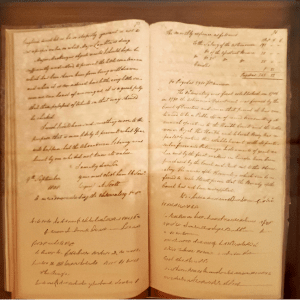
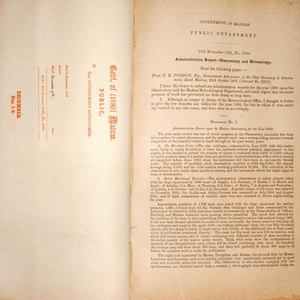
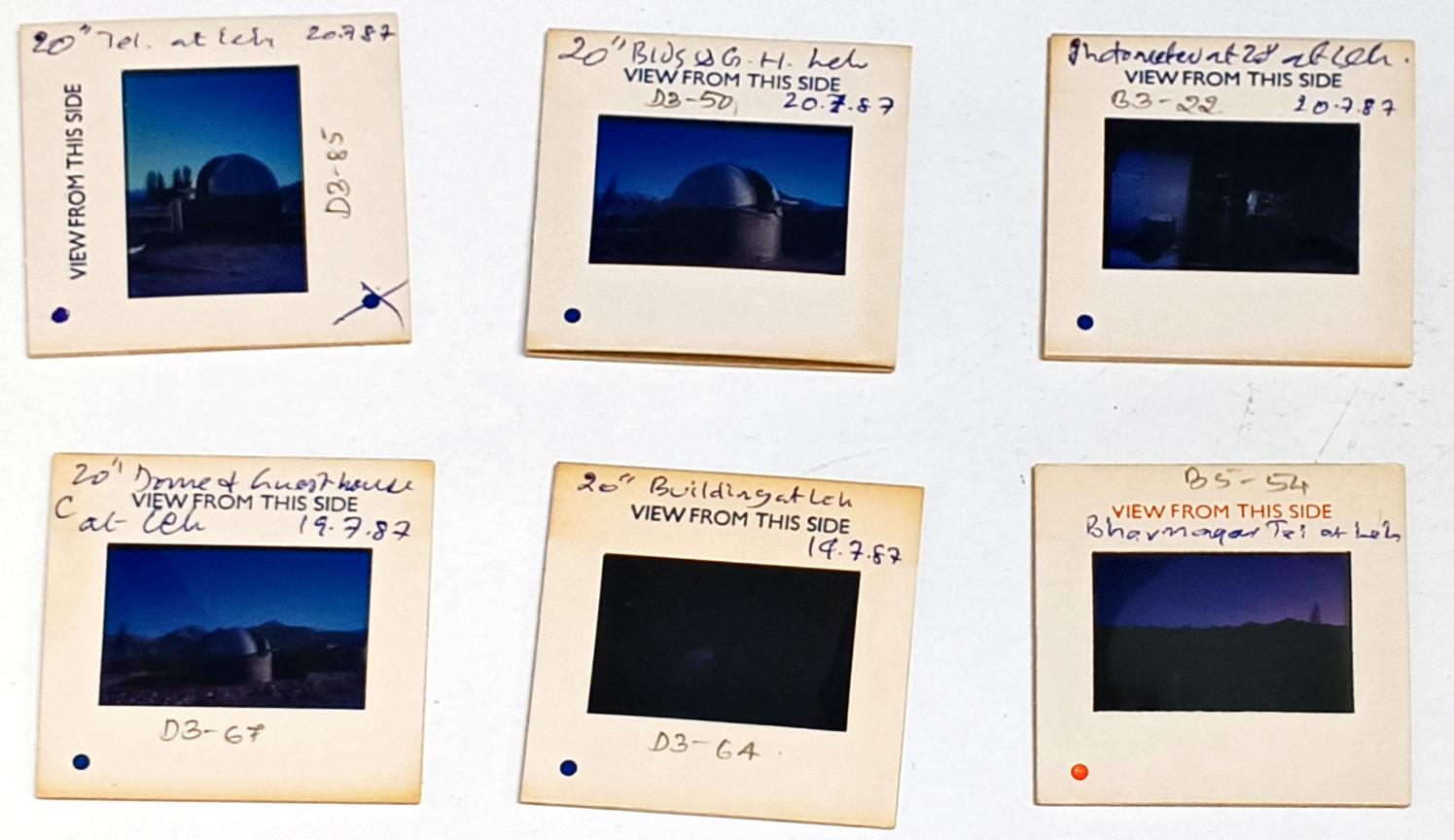
The IIA Archives preserve the history of astronomy and astrophysics in India, tracing the Institute’s journey since 1786 and its lasting contributions to global science. Through this Online Finding Aids portal, over 50,000 descriptions of artifacts and records are now available in a unified, searchable database, covering institutional milestones, regional events, and the work of past directors and scientists. New descriptions are continually added, and the forthcoming digitization of records will provide even wider access. The Archives safeguard IIA’s legacy while serving as a vital resource for researchers, students, and enthusiasts worldwide.
ARCHIVAL STORIES
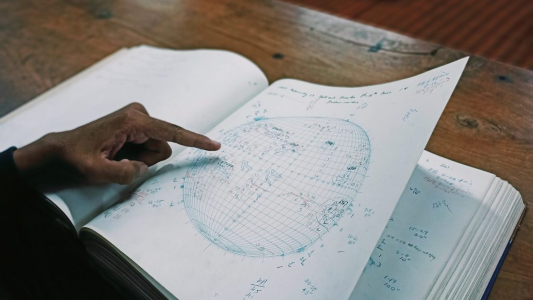
By the mid-19th century, astronomers recognized the periodicity of sunspots, crucial for understanding solar activity. They used telescopes with filters to safely observe the Sun and create detailed, annotated sun charts. Since 1904, the Kodaikanal Solar Observatory (KSO) has captured solar images in various wavelengths, recording sunspot positions on a Stonyhurst grid to track their movement. Modern techniques complement these historical records, providing a comprehensive view of solar activity over a century. The KSO's sun charts are invaluable for predicting solar cycles and understanding the Sun’s impact on Earth, bridging past observations with present technology.
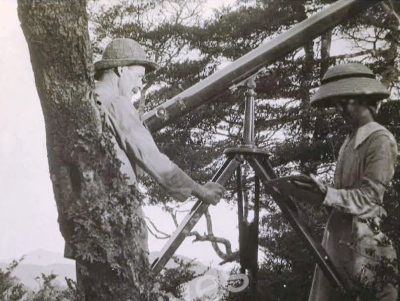
The scientific community commemorates the Centenary of the 1922 Indian expedition to Wallal, Australia, observing a solar eclipse to test Einstein's Theory of Relativity. Led by John Evershed, the expedition used advanced instruments to photograph star fields near the eclipsed Sun. Archives at the Indian Institute of Astrophysics preserve extensive historical documents related to Evershed and the expedition, including observation notes and photographs, highlighting its scientific significance.
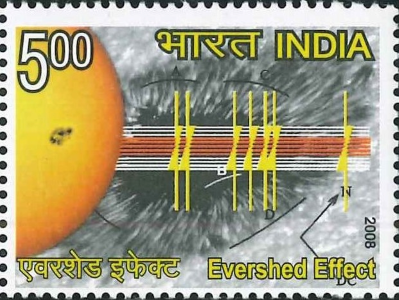
The Indian Institute of Astrophysics celebrates the 115th anniversary of the Evershed Effect's discovery at Kodaikanal Observatory. This breakthrough in solar physics, originating in India, underscores the institute's over 200-year legacy in studying celestial bodies and developing advanced instrumentation.
The Evershed Effect, observed in 1909 by John Evershed, revealed how plasma interacts with magnetic fields. This discovery significantly advanced our knowledge of sunspots and solar activity evolution. Evershed's analysis of sunspot spectra detected subtle shifts, indicating a radial outflow of solar plasma, now known as the Doppler effect.
NEWLY ADDED RECORDS
HIGHLIGHTS
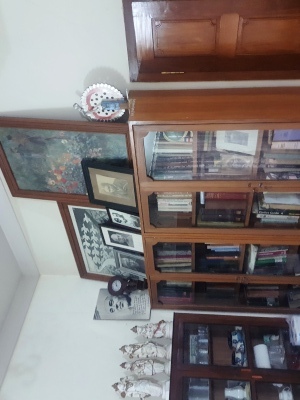
There are moments in the life of an institution that transcend routine – quiet, meaningful pauses when the past meets the present, and something deeply personal becomes part of a collective legacy. At the Indian Institute of Astrophysics (IIA), one such moment unfolded with the generous and symbolic gesture of Professor Ramanath Cowsik, an astrophysicist of international stature and former Director of IIA. Professor Cowsik served as the Director of the Indian Institute of Astrophysics from 1992 to 2003 – a period marked by visionary leadership and lasting contributions. Under his leadership, the Indian Astronomical Observatory (IAO) was established in Hanle, now home to the 2-meter Himalayan Chandra Telescope (HCT) and other vital instruments that place India on the global astronomical map.
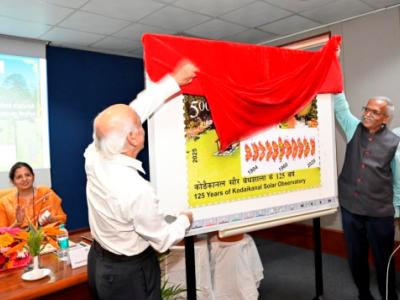
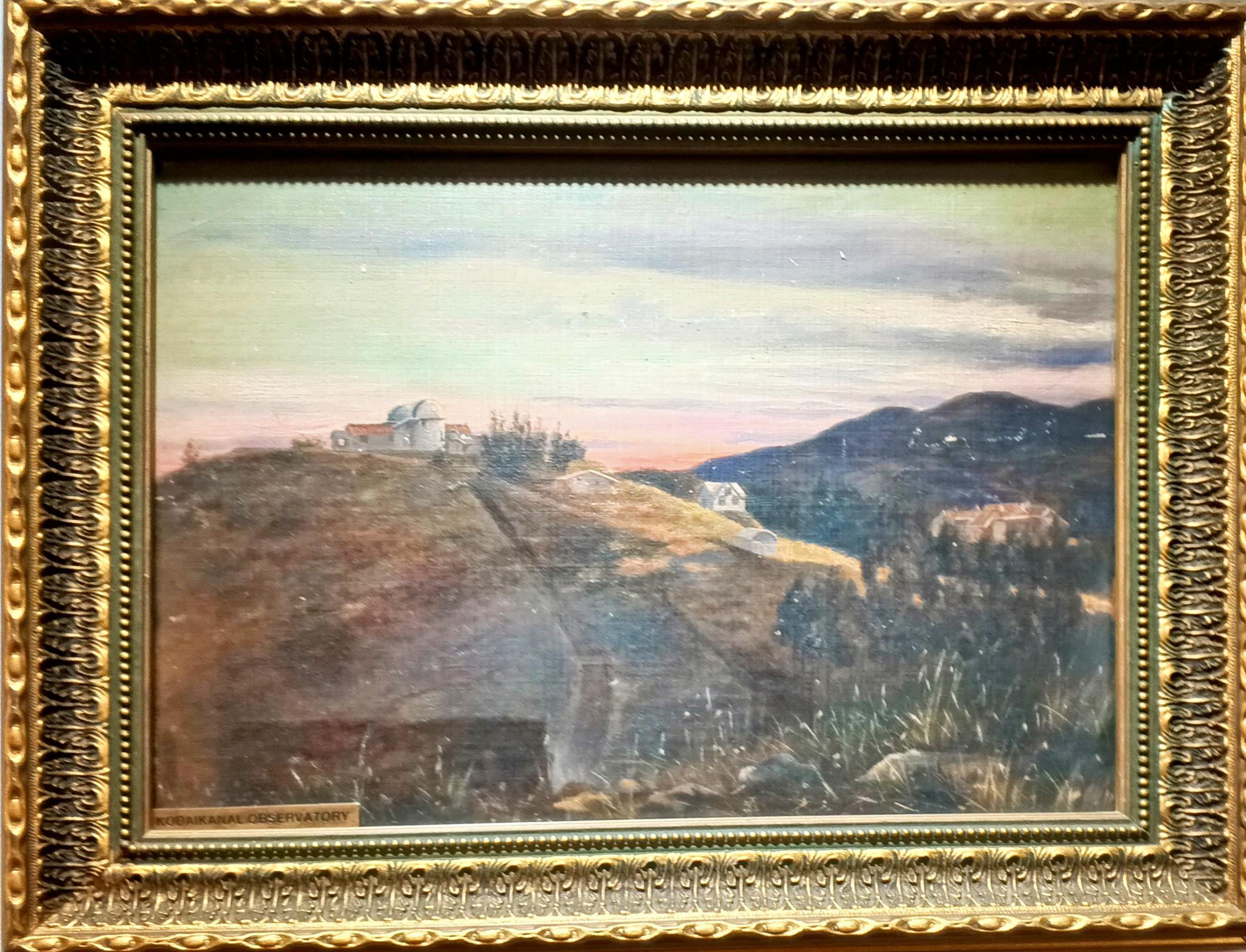
The Kodaikanal Solar Observatory (KSO), located amidst the mist-covered Palani Hills of Tamil Nadu, has stood as a monumental center of solar research in India for over 125 years. Established on 1 April 1899, the observatory is administered by the Indian Institute of Astrophysics (IIA) and is globally recognized for maintaining one of the world’s most continuous and scientifically valuable solar observation archives. Over its long and distinguished history, KSO has made pioneering contributions to the understanding of solar activity, from early photographic documentation of sunspots to advanced studies of solar flares, prominences, and the solar corona. Its data has proven indispensable to solar physicists and has informed critical research on solar-terrestrial interactions, space weather, and climate systems.
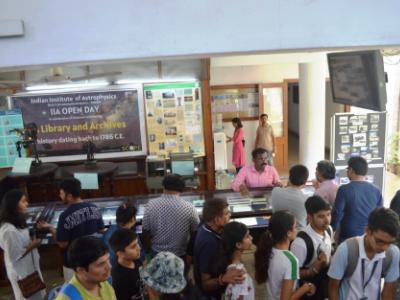
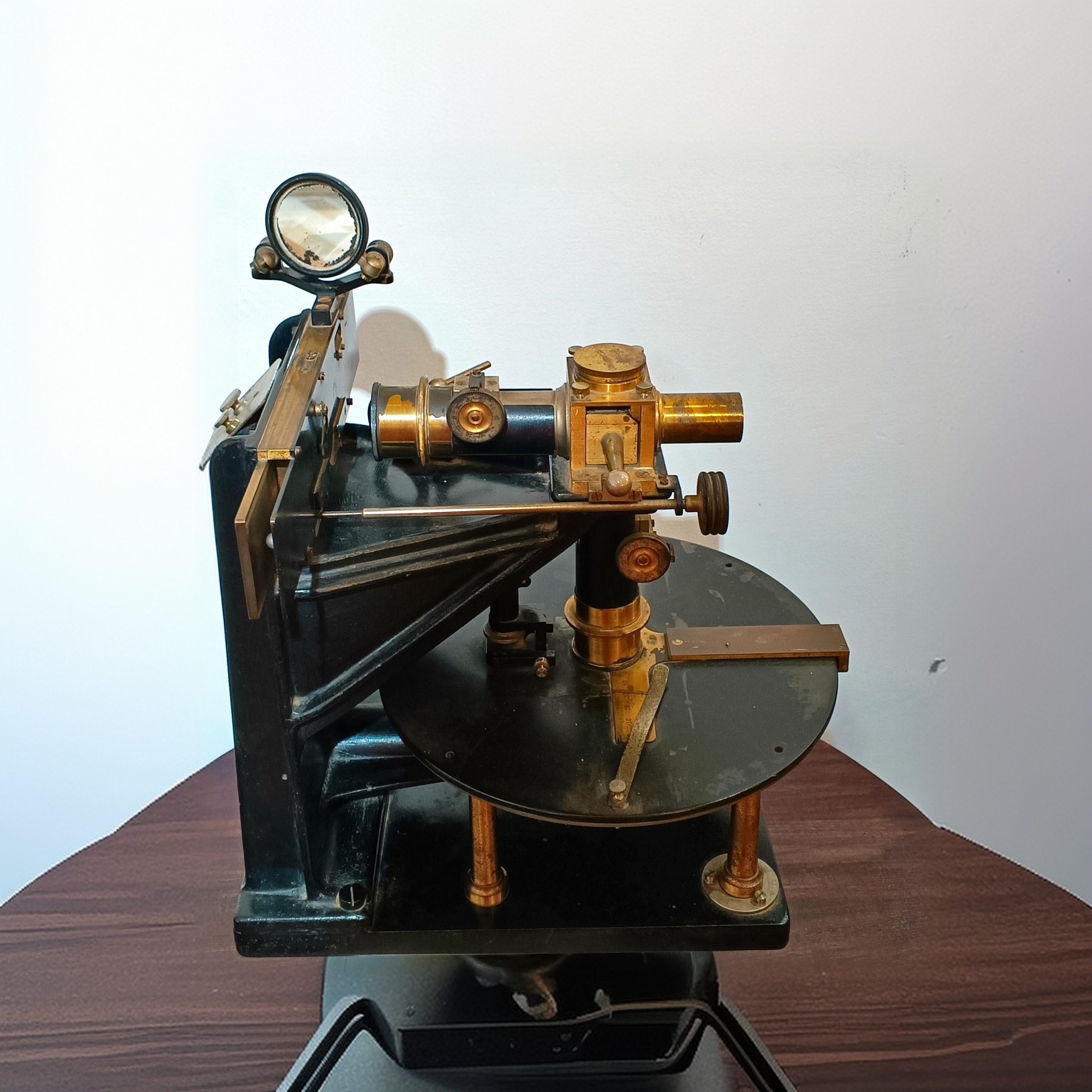
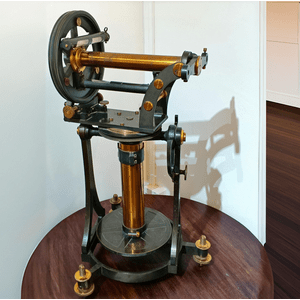
On 21 February 2026, the Indian Institute of Astrophysics (IIA) celebrated National Science Day through its annual Open Day at the Koramangala campus, Bengaluru, attracting more than 8,000 visitors. As part of the celebration, the IIA Library & Archives organised a special exhibition showcasing the institute’s rich astronomical heritage through archival records, historical photographs, documents, instruments, and curated posters. Highlights included collections related to M.K. Vainu Bappu, N.R. Pogson, Charles Michie Smith, and John Evershed, along with historical astronomical instruments and a 159-year compilation of solar eclipse observations. The exhibition provided visitors with an engaging opportunity to explore IIA’s scientific history and understand the role of its Library & Archives in preserving and sharing India’s astronomical heritage.
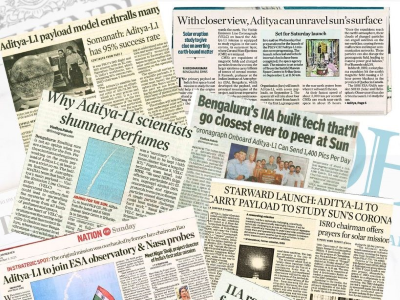
Aditya-L1 is the first Indian space-based observatory to study the Sun from a halo orbit around the first Sun-Earth Lagrangian point (L1), which is located roughly 1.5 million km from Earth. On September 2, 2023, at 11.50 hrs, the Polar Satellite Launch Vehicle (PSLV-C57) successfully launched the Aditya-L1 spacecraft from the Second Launch Pad of Satish Dhawan Space Centre (SDSC), Sriharikota. The Aditya-L1 mission carries a suite of seven scientific payloads to carry out a systematic study of the Sun. The payloads of Aditya-L1 are indigenously developed by different laboratories in the country. VELC, the main payload on Aditya-L1, was designed, built, and tested by the Indian Institute of Astrophysics at its Centre for Research and Education in Science and Technology (CREST) campus in Hoskote in close collaboration with ISRO.
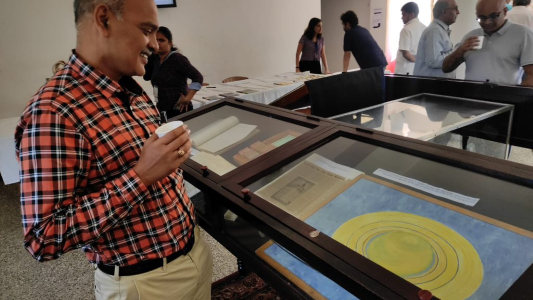
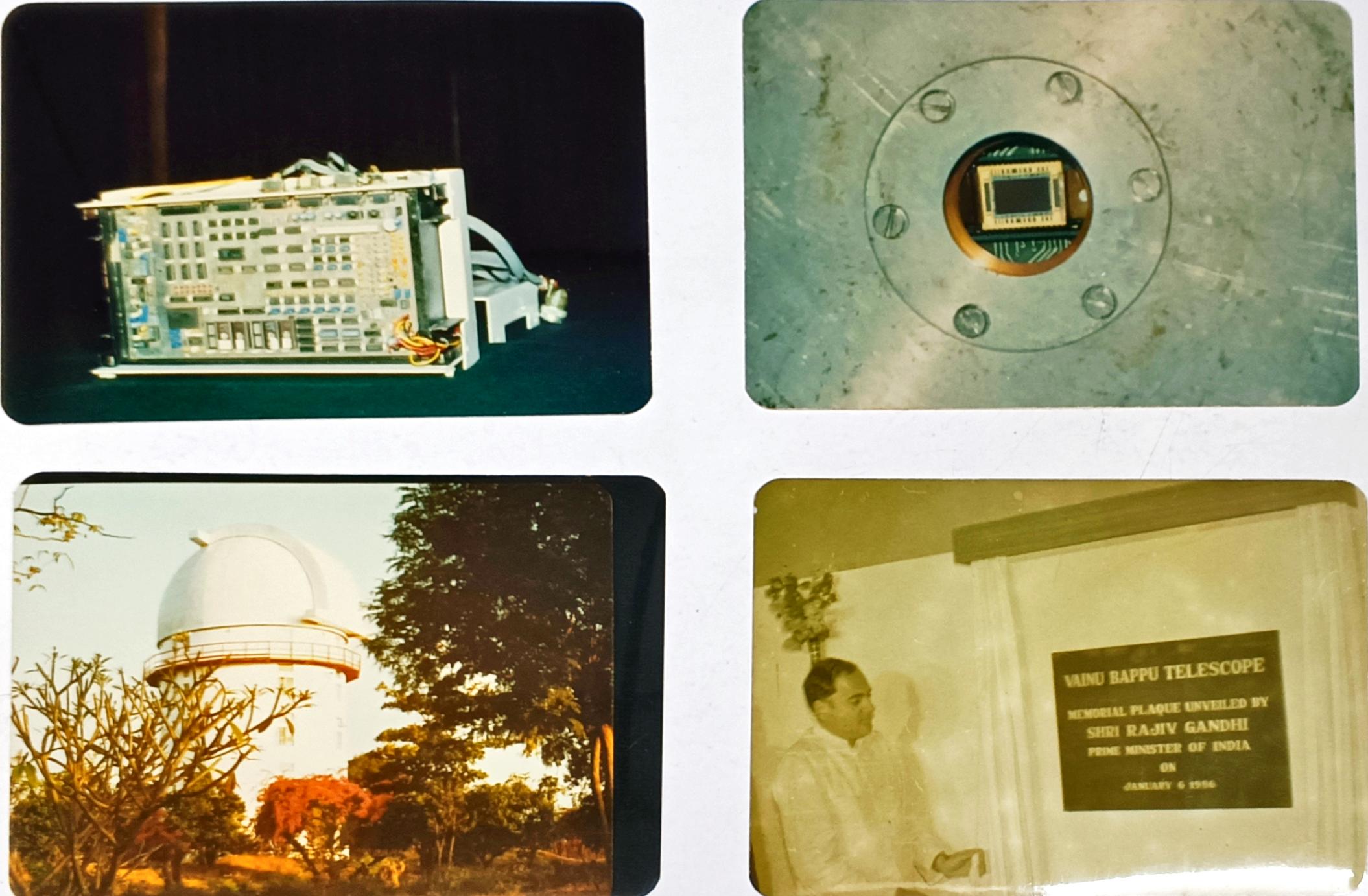
IIA celebrated the golden jubilee of The 40-inch telescope at IIA Main Campus and Vainu Bappu Observatory (VBO), Kavalur. This meeting highlighted the facility’s accomplishments over the last 50 years and honoured our esteemed guests involved in the 40-inch telescope installation. IIA library actively participated and showcased the resources during the event. The event commences with talks by renowned guests and its alumnus on various topics. The event also welcomes with all its astonishing posters and standees, which the library team voluntarily took the responsibility to prepare the best possible way to present the event in an eye-catching way. The library team also rigorously worked to collect all the relevant photographs, personal collections, slides, instruments, Archival items, and information available within its internal and external resources. It also prepared a list of all the relevant published articles and references in which the authors take immense pride in contributing to its legacy.