
INSTRUMENTS
Featured Collections
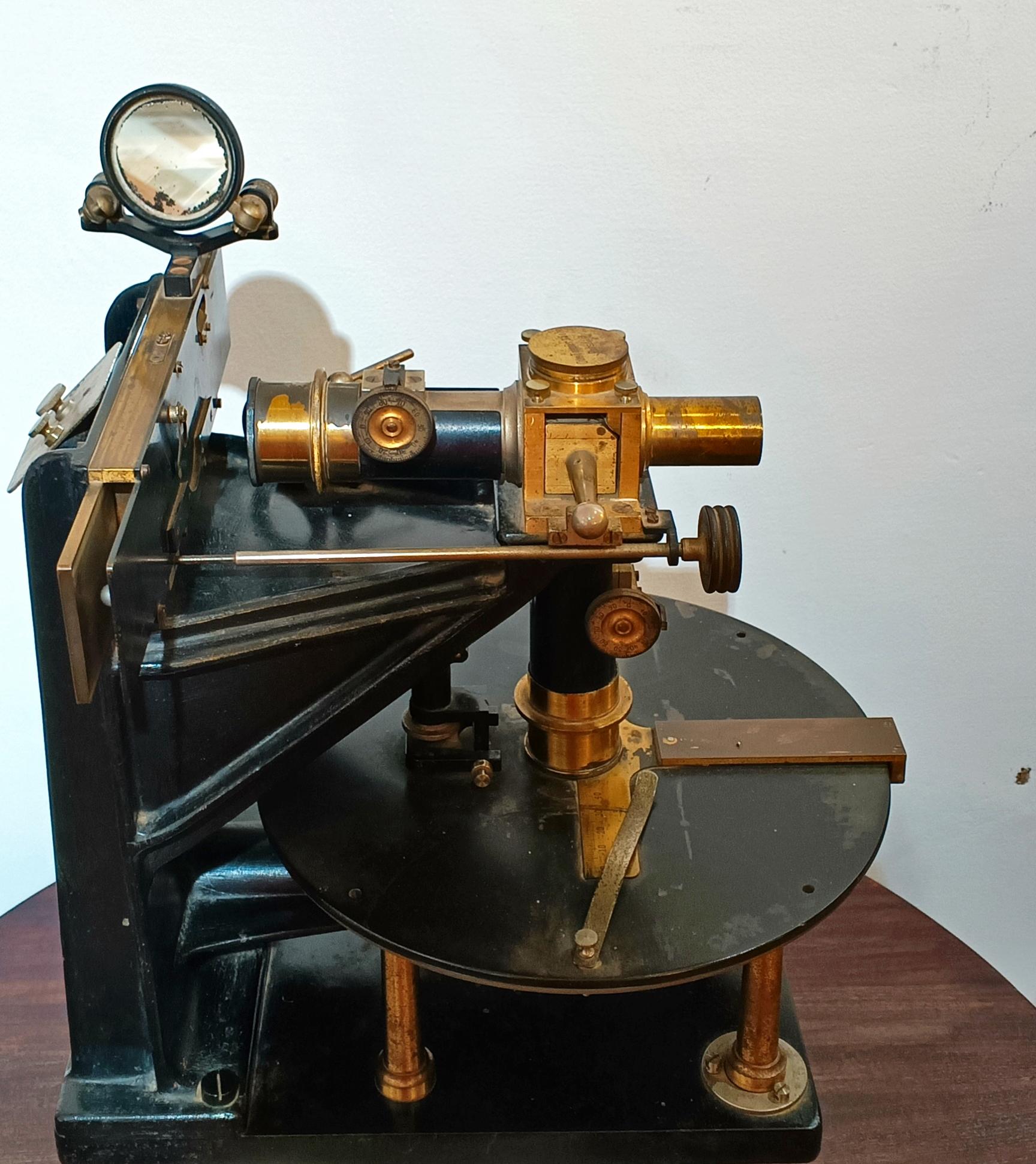
The photometer is an instrument designed to measure the intensity of light sources using a calibrated light sensor, quantifying brightness in standard units. The instrument was designed by Dr. Hartmann in 1912, this photometer became a pivotal tool in advancing methods of light intensity measurement across scientific and industrial applications. Its enduring relevance lies in its ability to provide accurate data for research, while also reflecting the evolution of precision instrumentation in the early 20th century.
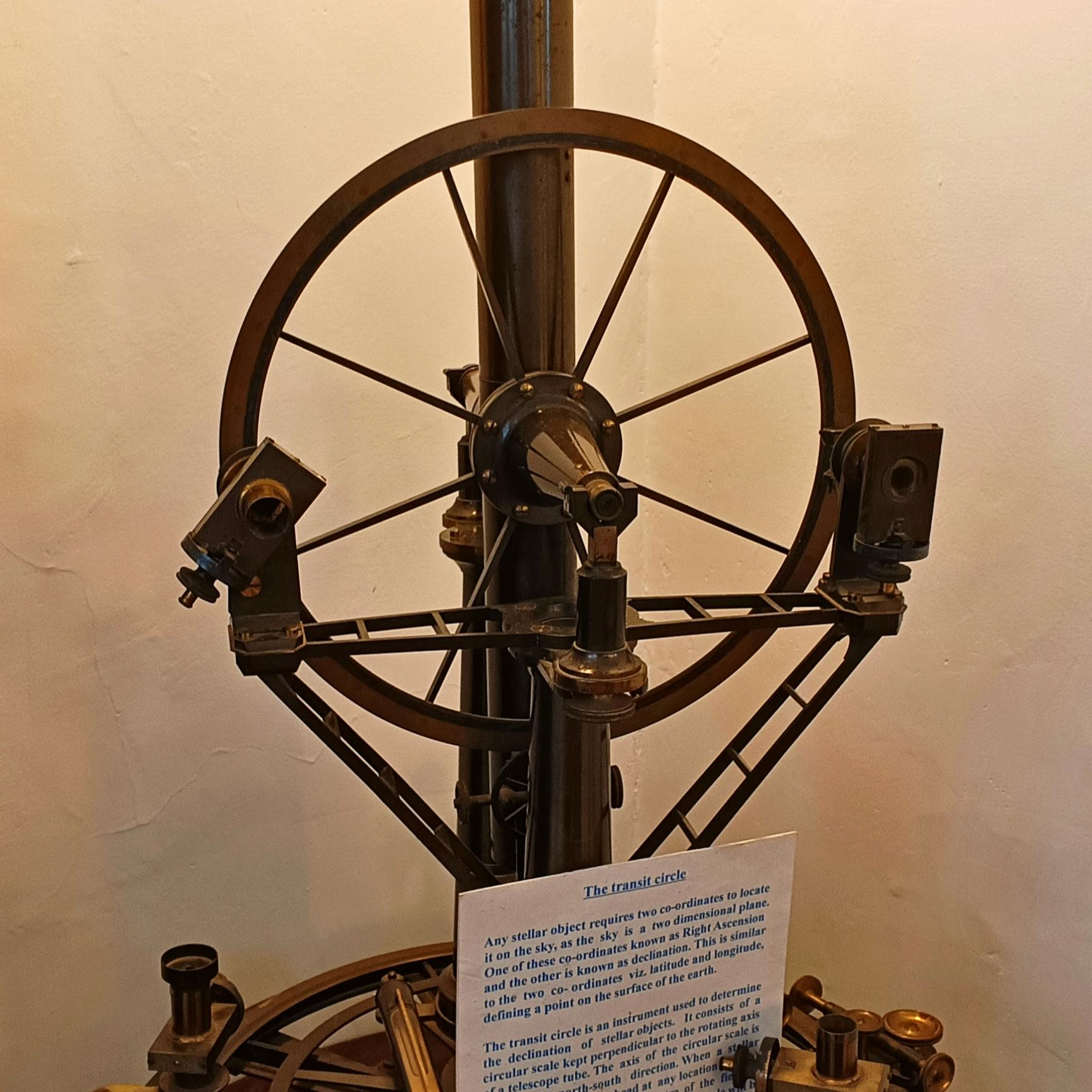
The transit circle is an astronomical instrument designed to determine the declination of stellar objects using a circular scale aligned with the telescope’s axis. When a star passes overhead at the zenith and aligns with the telescope’s center, the corresponding reading provides its declination. The instrument was designed by Sir George Biddell Airy in 1850, the transit circle marked a significant advancement in celestial measurement, greatly enhancing the precision and reliability of astronomical observations.
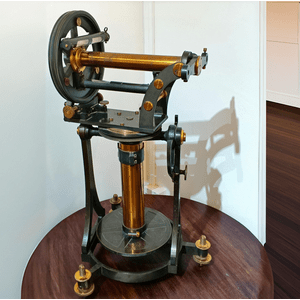
The IIA Archives preserves a theodolite, a precision instrument historically employed in land surveying and in the alignment, testing, and calibration of optical devices. Functioning essentially as a refracting telescope with finely aligned optical elements, it was capable of measuring tilt angles with remarkable accuracy, up to the order of arcseconds. The instrument was designed by Leonard Digges in 1850, it stands today as a significant archival artifact reflecting the institute’s scientific heritage.