
Accession and Appraisal
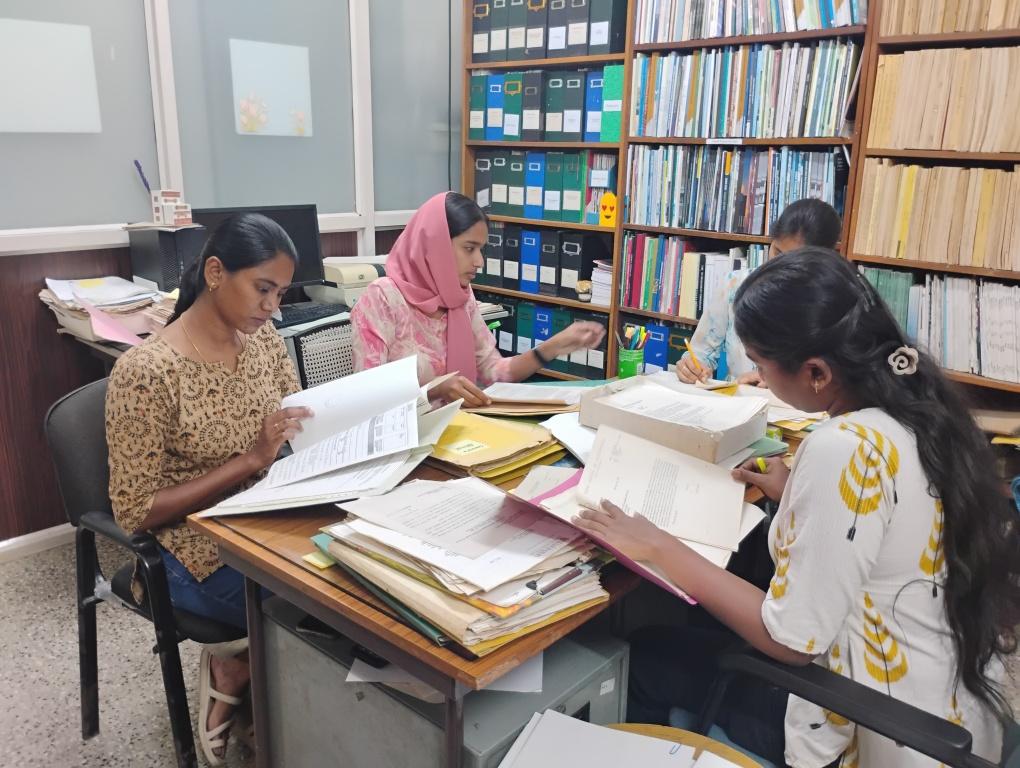
Archival collections are obtained through a systematic process of transferring records, which may occur via gifts, donations, or internal transfers from both the main campus and field stations of IIA. The terms and conditions governing this process are outlined when records are collected, and this is done by utilizing records transfer forms and accessions registers. Whenever historical material is introduced into the Archives by a current or former employee, it should be formally gifted to the Archives by signing a Deed of Gift. If the former employee is deceased, their materials can be contributed to the Archives by their next of kin or an appointed representative, provided they sign a Deed of Gift or the material can be placed in the Archives under a Permanent Loan with relevant restrictions. The Archivist is duly authorized to sign and accept such materials.In the accessioning process, materials must be inspected, and an inventory must be created. The transmitted records become the intellectual property of the archivist after this process. Additionally, the archivist begins to learn some basic details about the individual or organization transferring the data.Next process after the accession is appraisal, here the value of a record is evaluated.
In order to determine the worth of archive materials, archivists refer to institutional collection policy, their expertise, and research. The records' informational and evidential significance are among the few factors the archivist evaluates. While evidentiary value assesses whether documents have the ability to serve as proof to establish the whereabouts, dates, and reasons for events, informational value pertains to the people, locations, events, or subjects included in the records.Additional factors to take into account are the importance of records to the community, whether they are unique or composed of rare elements, and whether they can be used to guarantee responsibility. Archivists consider each of these aspects and record their choices. Records with little information and those that summarize or include the findings of others are removed during the appraisal of the records. The archivist's responsibility is to determine which records have the most information and are, thus, the best ones to preserve.Additionally, oral history interviews conducted for the institutional archives also necessitate the creation of a Deed of Gift to become part of the archival records. It's important to note that all records are subject to the restrictions specified in the Deed of Gift. In cases where there is no documented transfer of ownership for a record, the Archives Office holds the ultimate authority regarding the extent of accessibility for that record.