

MANUSCRIPTS
Featured Collections
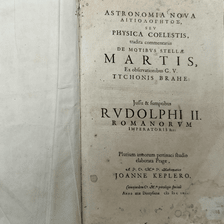
Johannes Kepler's Astronomia Nova, published in 1609, is the oldest book preserved in the Institute’s Archive. This latin volume records Kepler’s decade-long investigation of the motion of Mars, through which he identified the physical causes of planetary motion. The work provided the first rigorous scientific proof of Copernicus’s heliocentric theory of 1543 and stands as a landmark in the history of astronomy. The volume remains in a well-preserved condition.
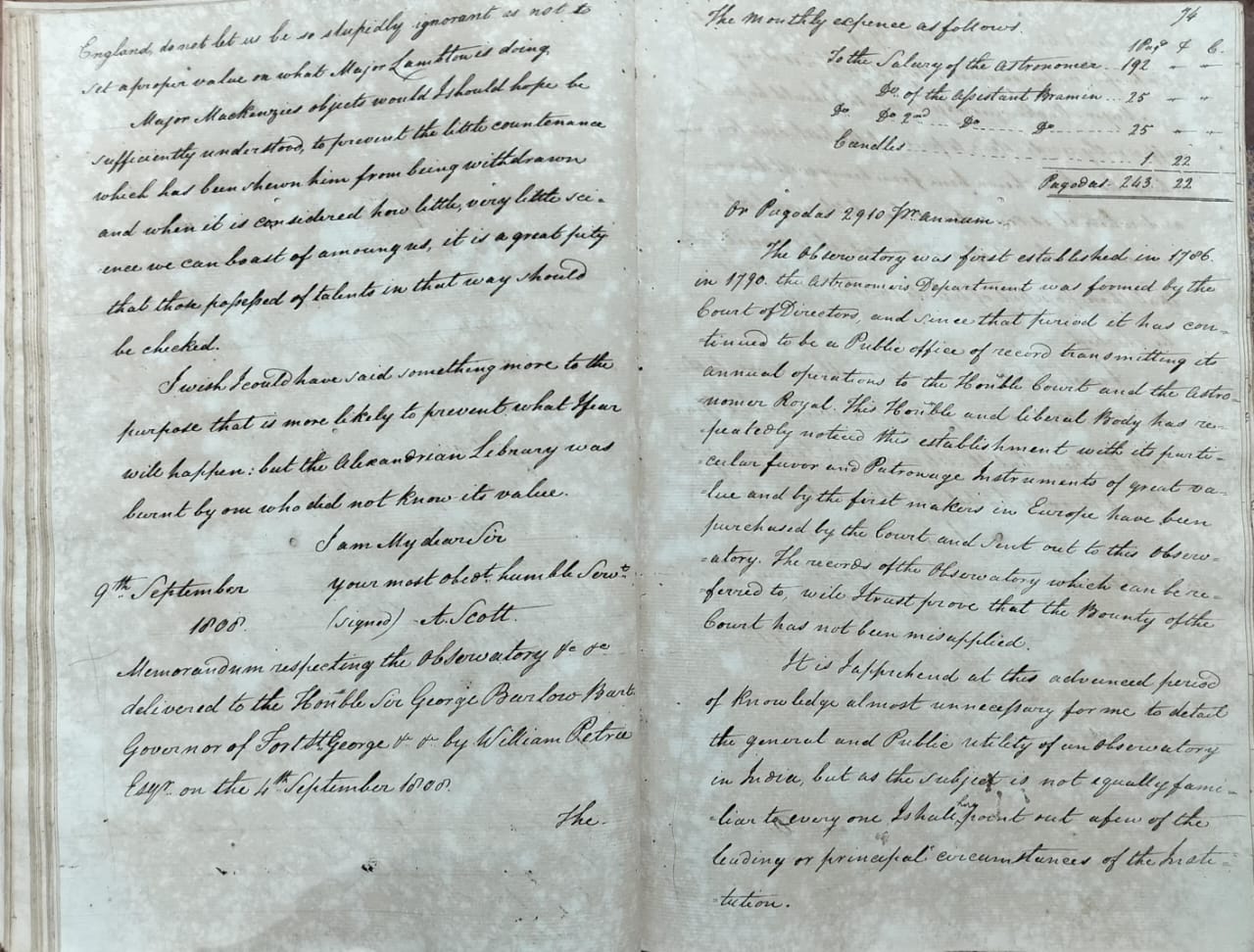
The Madras MS Records document the early history of the Madras Observatory and were maintained by astronomers Michael Topping (1789–1796) and John Goldingham (1796–1805). This handwritten record provides detailed accounts of the observatory’s establishment, operations, and notable events since its inception in 1786, offering valuable insights into its formative years.
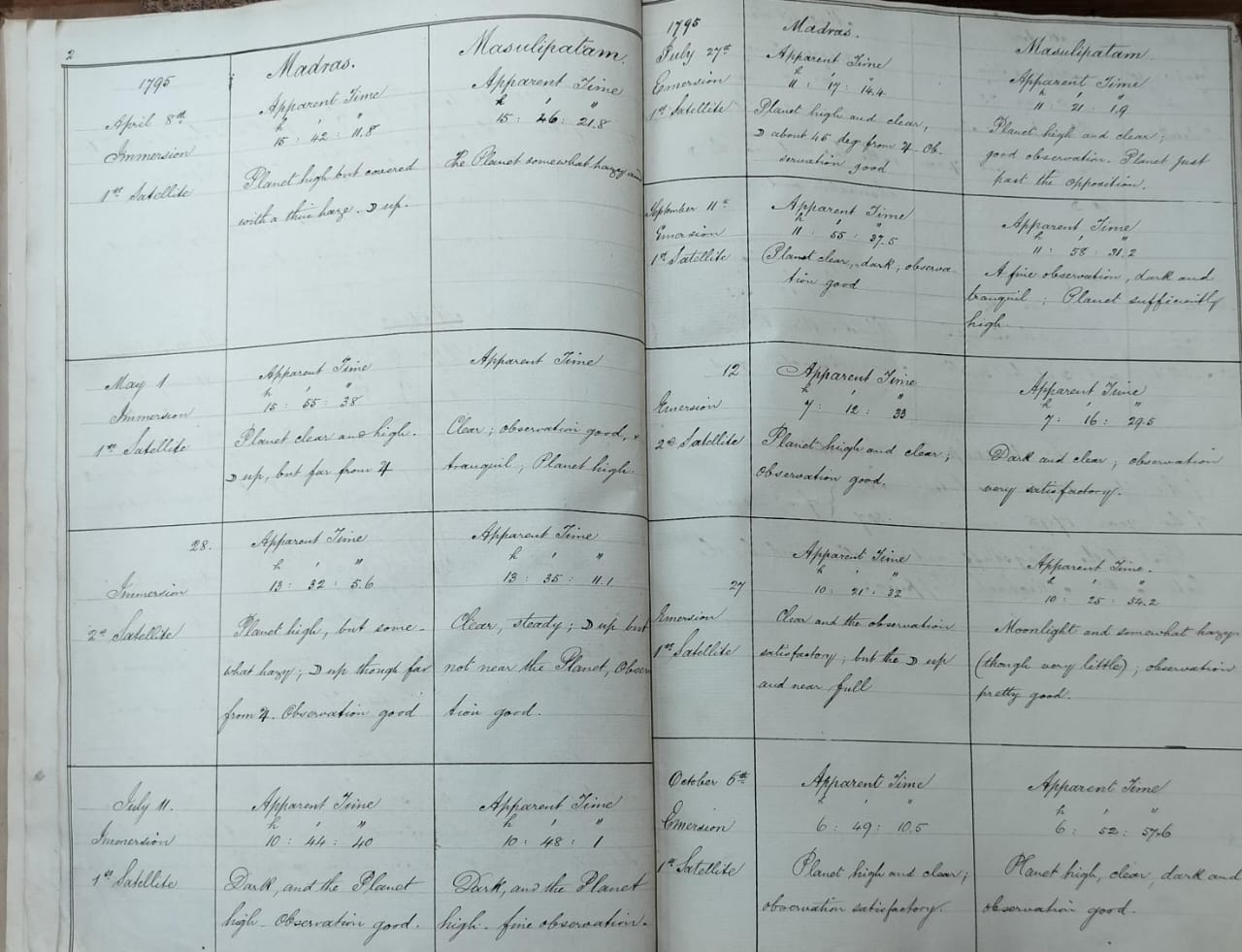
The handwritten observational records of J. Goldingham, astronomer at the Madras Observatory from 1796 to 1805, constitute a valuable historical source. They include detailed accounts of celestial events, such as the eclipses of Jupiter’s first and second satellites observed at Madras and Masulipatam. The records also document, with precision, the determination of the longitude of both locations through timing the immersion and emersion of Jupiter’s satellites.