

Identity area
Type of entity
Authorized form of name
Parallel form(s) of name
Standardized form(s) of name according to other rules
Other form(s) of name
Identifiers for corporate bodies
Description area
Dates of existence
History
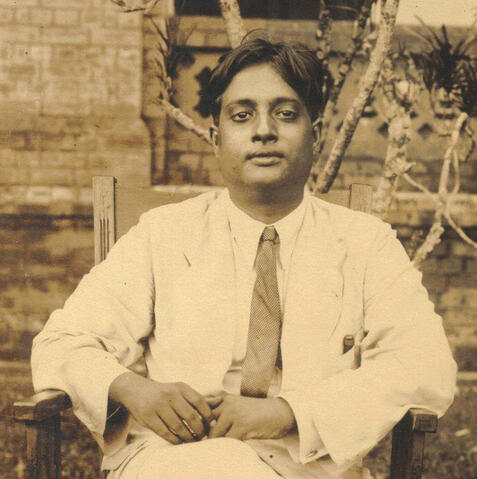
Satyendra Nath Bose (January 1, 1894 – February 4, 1974) was an eminent Indian physicist whose pioneering work in quantum mechanics led to the foundation of Bose–Einstein statistics and the concept of the boson, a class of particles named after him. In 1924, he sent his ground breaking paper on the quantum statistics of photons to Albert Einstein, who recognized its significance, translated it into German, and published it—marking the beginning of the Bose–Einstein collaboration. Bose’s theoretical insights later paved the way for the prediction of the Bose–Einstein condensate, a new state of matter observed decades later. Beyond research, he was a dedicated teacher, serving as professor and later vice-chancellor at the University of Calcutta and the University of Dhaka, and was known for promoting science education in India. His work earned him the Padma Vibhushan in 1954, and he remains one of the most celebrated figures in modern physics.