Showing 570 results

Authority record
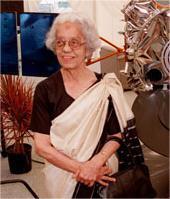
Chandrasekhar, Lalitha
Person · 1910 - 2013

Lalitha Doraiswamy Chandrasekhar (15 October 1910 – 2 September 2013) was an Indian physicist and the wife of Nobel laureate Subrahmanyan Chandrasekhar. She earned her honours degree in physics from Presidency College, Madras, and briefly taught science and mathematics before pursuing research under C. V. Raman. Married in 1936, she moved to the United States with her husband, supporting his academic career at Yerkes Observatory and the University of Chicago. Lalitha was also an accomplished Carnatic musician and flautist, with a deep interest in literature and social causes. Her writings include essays and contributions to volumes of her husband’s selected papers.
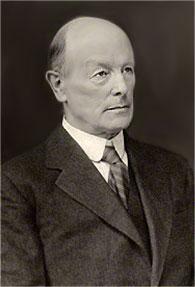
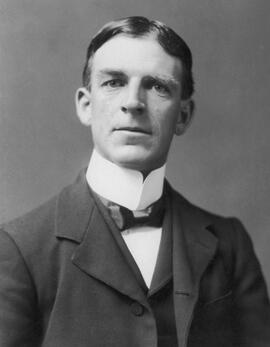
Cardew, Alexander
Person · 1861 - 1937

Sir Alexander Gordon Cardew (14 March 1861 – 12 January 1937) was a British civil servant in the Indian Civil Service who played a prominent role in the administration of the Madras Presidency during the late colonial period. Born in Bath, Somerset, England, and educated at Somersetshire College and The Queen’s College, Oxford, he entered the ICS in 1881. Over his career, he served as Under-Secretary to the Government of Madras, Inspector-General of Prisons, Collector and Magistrate, and later Secretary to Government in the Legislative, Educational, and Revenue Departments.

Campbell, William Wallace

William Wallace Campbell (April 11, 1862 – June 14, 1938) was an American astronomer and director of Lick Observatory from 1901 to 1930. He specialized in spectroscopy. He was the tenth president of the University of California from 1923 to 1930.

Campbell, William Wallace
Person · 1862 - 1938

William Wallace Campbell (April 11, 1862 – June 14, 1938) was an American astronomer renowned for his spectroscopic studies of stars and for leading eclipse expeditions. He served as the director of the Lick Observatory from 1901 to 1930, where he advanced the use of spectroscopy to measure stellar radial velocities, contributing to the understanding of stellar motions and binary systems. Campbell also directed several important solar eclipse expeditions, including the 1922 observation in Australia that provided strong confirmation of Einstein’s general theory of relativity. Later, he became president of the University of California (1923–1930) and of the International Astronomical Union (1925–1935).

Campbell, Leon
Person · 1881 - 1951

Leon Campbell (March 9, 1881 – November 10, 1951) was an American astronomer best known for his work on variable stars. He spent most of his career at the Harvard College Observatory, where he served as the American Association of Variable Star Observers’ (AAVSO) Recorder for over three decades. Campbell compiled and analyzed vast amounts of observational data from amateur and professional astronomers, helping to establish standardized methods for variable star observation. His meticulous record-keeping and dedication significantly expanded knowledge of stellar variability and fostered collaboration between the professional and amateur astronomy communities.