

Person
Person
Person
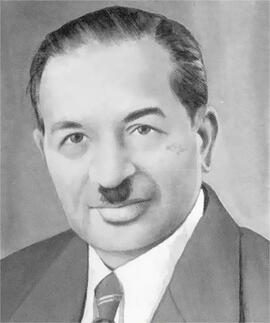
Person
·
1894 - 1955
Sir Shanti Swarup Bhatnagar (1894–1955) was a pioneering Indian physical chemist and visionary scientific administrator, often hailed as the “Father of Research Laboratories in India.” Educated in India and at University College London, he made notable contributions to colloid and magneto-chemistry, including the co-invention of the Bhatnagar–Mathur Magnetic Interference Balance. In 1940, he became the first Director-General of the Council of Scientific and Industrial Research (CSIR) and was instrumental in establishing twelve national laboratories across India. He also served as the first Chairman of the University Grants Commission (UGC) and held key positions in the Atomic Energy Commission and the Ministry of Education. Beyond science, Bhatnagar was a poet, dramatist, and writer at the Banaras Hindu University. His achievements earned him honors such as OBE, knighthood, Fellowship of the Royal Society, and the Padma Bhushan. After his death, the prestigious Shanti Swarup Bhatnagar Prize for Science and Technology was instituted in his memory, cementing his legacy in India’s scientific growth.

Person
B. C. Bhatt is an Associate Professor in the Research Division of Stellar and Galactic Astronomy at the Indian Institute of Astrophysics, Bengaluru, where he has been serving since 1994. His expertise lies in observational astronomy, with research interests spanning stellar evolution, star formation, and photometric studies. Early in his career, he contributed to the site-testing and characterization of Hanle in Ladakh, which later became home to India’s high-altitude astronomical observatory.
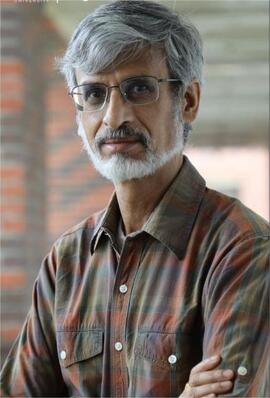
Person
·
1959
Prof. Dipankar Bhattacharya is an eminent Indian astrophysicist known for his research on neutron stars, supernova remnants, and high-energy cosmic phenomena. He earned his Ph.D. from the Indian Institute of Science in 1988 and worked at the Raman Research Institute (1987–2007), with post-doctoral stints in Amsterdam and California. Later, he joined IUCAA, Pune, and in 2022 became the Sunanda & Santimay Basu Chair in Astrophysics at Ashoka University. He played a leading role in India’s AstroSat mission as chair of its Science Working Group. A fellow of the Indian Academy of Sciences and the National Academy of Sciences, he has received awards including the M.K. Vainu Bappu Gold Medal and the C.V. Raman Award for Space Science. His work continues to shape India’s space astronomy research and missions.
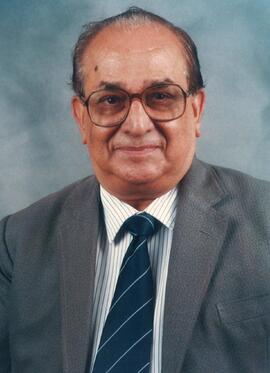
Person
·
1930 - 2012
Jagadish Chandra Bhattacharyya (1930 – 2012 ) was an Indian professor well known for his contributions in experimental astrophysics. He became the director of the Indian Institute of Astrophysics in 1982. In 1971 he discovered a thin atmosphere around Ganymede, a satellite of Jupiter. For this he used ground-based, optical telescope at Kavalur, Tamil Nadu, India. In 1977 he discovered an extended ring system around Uranus using lunar an Occultation technique. The Voyager mission later confirmed his discovery.
Jagadish Chandra Bhattacharyya (1930 – 2012 ) was an Indian professor well known for his contributions in experimental astrophysics. He became the director of the Indian Institute of Astrophysics in 1982. In 1971 he discovered a thin atmosphere around Ganymede, a satellite of Jupiter. For this he used ground-based, optical telescope at Kavalur, Tamil Nadu, India. In 1977 he discovered an extended ring system around Uranus using lunar an Occultation technique. The Voyager mission later confirmed his discovery.
Person