
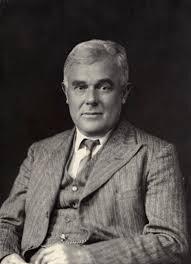
Philip Herbert Cowell (1870–1949) was a British astronomer and mathematician noted for his precision work in celestial mechanics, particularly the computation of planetary and cometary orbits. Educated at Trinity College, Cambridge, he joined the Royal Greenwich Observatory in 1896, where he eventually became Chief Assistant. Cowell is best known for his detailed calculations of Halley’s Comet’s orbit, working with Andrew Claude de la Cherois Crommelin to successfully predict its 1910 return with unprecedented accuracy. His work extended to lunar theory, the motions of minor planets, and improvements in astronomical constants. A fellow of the Royal Society, Cowell’s meticulous computational methods significantly advanced the accuracy of astronomical ephemerides in the early 20th century.
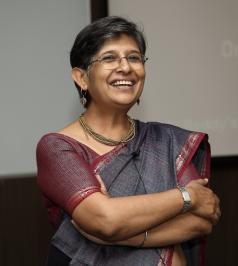
E. M. Cook was a British colonial official who served as an Under-Secretary to the Government of India in 1912.
William Barnard Clarke (1806–1865) was an English architect, cartographer, archaeological writer, numismatist, art collector, and translator, best known for his detailed and accessible maps produced for the Society for the Diffusion of Useful Knowledge (SDUK). A founder and first president of the Architectural Society of London in 1831, Clarke combined architectural precision with cartographic artistry. His works included the Celestial Atlas (1830) and a celebrated series of city plans—covering ancient and modern Rome as well as major European capitals such as Paris, Berlin, St. Petersburg, and Naples—often adorned with architectural vignettes. He also created archaeological plans and panoramic views of Pompeii, notably the House of Pansa, which reflected his deep antiquarian interests.
William Barnard Clarke (1806–1865) was an English architect, cartographer, archaeological writer, art collector, numismatist, and literary translator. He was the founding president of the Architectural Society of London in 1831. Clarke was an active member of and contributor to the Society for the Diffusion of Useful Knowledge.
Indira Chowdhury is a distinguished Indian historian, archivist, and oral historian, renowned for her contributions to public history and the documentation of contemporary institutional legacies. She earned her Ph.D. in History from the School of Oriental and African Studies, University of London, and served as Professor of English at Jadavpur University before founding the Centre for Public History at the Srishti School of Art, Design and Technology in Bengaluru. As the founder of ARCH (Archival Resources for Contemporary History), she has led significant archival projects for institutions such as the Tata Institute of Fundamental Research, IIT Kanpur, Naandi Foundation, and Dr. Reddy’s Laboratories.
P.R. Chidambara Ayyar joined as an Assistant at the Solar Physics Observatory, Kodaikanal on April 20th 1920. He was elected a fellow of the Royal Astronomical Society on 13th March 1925. He worked in Kodaikanal Observatory for twenty years and was transferred to Poona, Meteorological department in April 1940.