
Michael Andrew Dopita is an Australian astronomer known for his research in extragalactic astronomy, astrophysical spectroscopy, and the study of the interstellar medium and active galactic nuclei. He has been affiliated with institutions such as the Australian National University’s Research School of Astronomy and Astrophysics, where he served as a professor. Dopita’s work has contributed to understanding the physical processes in galaxies, including star formation, supernova remnants, and the chemical evolution of the universe. He has also been involved in developing theoretical models and diagnostic tools for interpreting astronomical spectra. Dopita was the 1983 winner of the Pawsey medal.
Leonard Digges (c.1515–c.1559) was an English mathematician and surveyor, credited with significant contributions to practical geometry, land surveying, and optical science. He authored works such as Tectonicon, Pantometria, and Prognostication Everlasting, which dealt with measurement, instruments, and astronomical calculations. Digges is often associated with the early development of the theodolite and has been linked, though with limited evidence, to the concept of the telescope before its official invention. His son, Thomas Digges, expanded on his father’s ideas and became known for promoting the Copernican heliocentric model in England. He designed theodolite.
Leonard Digges (c.1515 – c.1559) was a well-known English mathematician and surveyor, credited with the invention of the theodolite, and a great populariser of science through his writings in English on surveying, cartography, and military engineering. His birth date is variously suggested as 1515 or 1520 (but certainly by 1530).
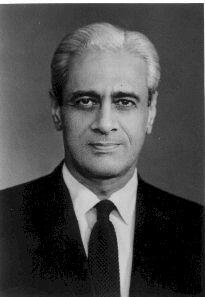
Satish Dhawan (1920–2002) was an Indian aerospace engineer and educationist who played a pivotal role in India’s space program. As Chairman of the Indian Space Research Organisation (ISRO) from 1972 to 1984, he oversaw key milestones including the launch of India’s first satellites and the development of the SLV-3 launch vehicle. A pioneer in experimental fluid dynamics and boundary layer theory, he also served as Director of the Indian Institute of Science, Bengaluru. Dhawan is remembered for combining scientific excellence with visionary leadership, laying the foundations for India’s indigenous space technology.