
Surgeon General with the Government of Madras
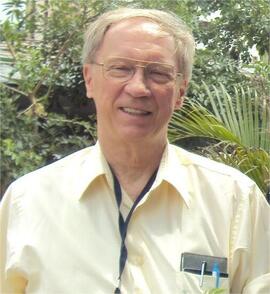
Bruce Carl Berndt (born 13 March 1939) is an American mathematician renowned for his contributions to analytic number theory and for his pioneering work on the legacy of Indian mathematician Srinivasa Ramanujan. As Professor Emeritus at the University of Illinois at Urbana-Champaign, Berndt devoted decades to editing, proving, and publishing Ramanujan’s previously unpublished results, culminating in the acclaimed five-volume series Ramanujan’s Notebooks. His meticulous scholarship not only preserved Ramanujan’s work but also integrated it into modern mathematics, earning him global recognition as the foremost authority on Ramanujan’s mathematical contributions.
T. D. Berrington served as the Director General of Telegraphs in India from 1907 to 1911, overseeing the administration, technical operations, and expansion of the telegraph network. His tenure was marked by significant events, most notably the Telegraph General Strike of 1908, during which he played a central role in negotiations, including confidential discussions with the Chamber of Commerce to address the crisis.
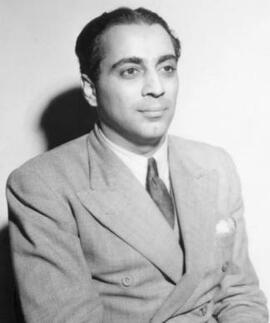
Homi J. Bhabha (30 October 1909 – 24 January 1966) was an Indian nuclear physicist known as the "father of the Indian nuclear program." He founded two of India's most prominent scientific institutions, the Tata Institute of Fundamental Research (TIFR) and the Atomic Energy Establishment, Trombay (AEET), which was later renamed the Bhabha Atomic Research Centre (BARC) in his honor. He is known for his work on the process of electron-positron scattering, which was later named Bhabha scattering in his honor.
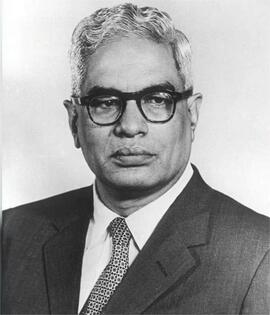
Suri Bhagavantam (1909–1989) was an Indian physicist and scientific administrator known for his work in optics, spectroscopy, and quantum mechanics. He served as Director of the Indian Institute of Science, Bangalore, and later as Scientific Adviser to the Ministry of Defence, playing a key role in advancing India’s defence research. Bhagavantam was also the Director General of the Defence Research and Development Organisation (DRDO) and contributed significantly to building India’s scientific and technological capabilities in the post-independence era.
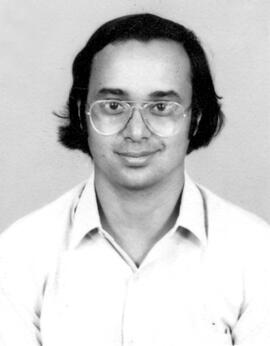
Prof. Bhaskar Datta (1949–1999) was a distinguished astrophysicist associated with the Indian Institute of Astrophysics, known for his expertise in the study of neutron stars, compact stellar objects, and high-energy astrophysics. Over his career, he contributed significantly to understanding the structure, stability, and evolution of rotating neutron stars, as well as their astrophysical implications. His research, often published in collaboration with leading scientists in India and abroad, advanced theoretical models in relativistic astrophysics and dense matter physics. Prof. Datta was deeply respected for his rigorous scientific approach and dedication to mentoring young researchers. His untimely passing on 3 December 1999, at the age of 50, was regarded as a major loss to the Indian astronomical community, and he was remembered with tributes in the Bulletin of the Astronomical Society of India for his scholarly contributions and inspiring presence in the field.