Showing 570 results

Authority record
Gerland, Georg
Person · 1847 - 1903

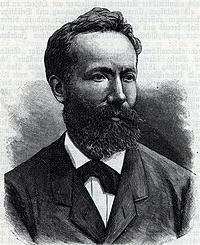
Georg Gerland (1849–1903) was a German anthropologist and geophysicist whose work bridged the fields of human evolution and Earth sciences. He applied geological principles to anthropological studies, using human skeletal remains and geological data to better understand early human development and adaptation to different environments. Gerland's interdisciplinary approach helped link human history with Earth's physical changes, particularly in relation to climate and geography. Although not as widely recognized as contemporaries like Darwin, his contributions played a significant role in shaping early ideas about human evolution and the interaction between humans and their environment, laying the foundation for future research in both anthropology and geophysics.
Godbole, Rohini
Person · 1952 - 2024

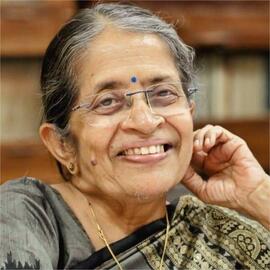
Rohini Godbole is an Indian theoretical physicist known for her work in the field of high-energy physics, particularly in particle physics and astrophysics. She has made notable contributions to the understanding of supersymmetry, string theory, and particle colliders. Her research focuses on topics like the Higgs boson, dark matter, and the search for new particles at high-energy particle colliders, such as those used at the Large Hadron Collider (LHC).

Goldberg, Leo
Person · 1913 - 1987

Leo (Leopold) Goldberg (26 January 1913 – 1 November 1987) was an American astronomer renowned for his work in solar physics, stellar spectroscopy, and atomic physics, as well as for his leadership of major observatories. Educated at Harvard under Donald H. Menzel, he introduced key concepts such as microturbulence in stellar spectra and advanced early space-based solar observations. Goldberg served as Director of the University of Michigan’s Astronomy Department (1946–1960), Harvard College Observatory (1966–1971), and Kitt Peak National Observatory (1971–1977), and was President of both the American Astronomical Society and the International Astronomical Union. A skilled scientific diplomat during the Cold War, he received numerous honors, including NASA’s Distinguished Service Medal, and left a lasting legacy in observational and institutional astronomy.

Goldingham, John
Person · 1767 - 1849

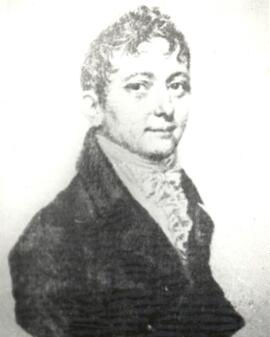
John Goldingham was a notable figure in astronomy and engineering, serving as the first official astronomer of the Madras Observatory and later becoming the Presidency Civil Engineer in 1800. During his tenure, Goldingham established the Madras time, 5 hours and 21 minutes ahead of GMT, laying the closest precedent to the later Indian Standard Time adopted in 1906. His work was influential in astronomy, contributing to the publication of the 'Madras Catalogue' that documented the positions of 11,000 stars.