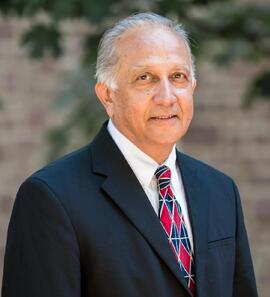
Ramanath Cowsik is an Indian astrophysicist renowned for his contributions to cosmic ray physics, neutrino astronomy, and high-energy astrophysics. He is particularly known for the Cowsik–McClelland limit, which placed important constraints on the mass of neutrinos, influencing particle physics and cosmology. Cowsik has also worked extensively on cosmic gamma-ray sources, dark matter, and the origin of cosmic rays. Over his career, he has held prominent academic and research positions, including serving as Director of the Indian Institute of Astrophysics, Bengaluru.
Ramanath Cowsik was born in India.Cowsik has served briefly (3 years) on the faculty at Berkley, at Max Plank Institute fur Extraterrestrische Physik (1 year), as the Director Indian Institute of Astrophysics (10 years), retired from Tata Institute as a Distinguished Professor, and joined the Faculty of Washington University in St. Louis at the end of 2002 and served as the Director of McDonnell Center for the Space Sciences (12 years).
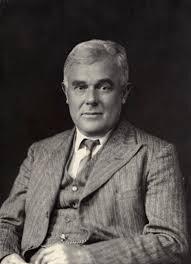
Horace Darwin (13 May 1851 – 22 September 1928) was a British engineer, inventor, and the youngest son of the naturalist Charles Darwin. Trained in engineering at Trinity College, Cambridge, he co-founded the Cambridge Scientific Instrument Company in 1881, which became a leading manufacturer of precision scientific apparatus. Horace designed and improved various laboratory instruments, including microscopes, micrometers, and devices for measuring atmospheric and physiological phenomena, helping to advance experimental science in the late 19th and early 20th centuries.
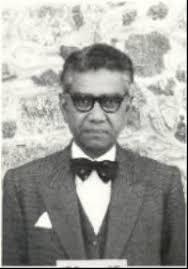
Anil Kumar Das (1902–1961) was an eminent Indian astrophysicist who served as the Director of the Indian Institute of Astrophysics (IIA) and was a key figure in the development of solar and stellar astronomy in India. Educated at Patna University and later at Imperial College London, he specialized in astrophysical spectroscopy. Before joining IIA, he worked at the Kodaikanal Observatory, where he carried out significant research on the solar spectrum, prominences, and sunspots. As Director, Das strengthened observational programs, modernized instrumentation, and encouraged research in both solar and stellar astrophysics.