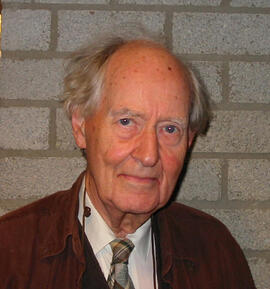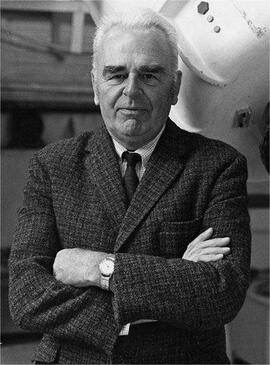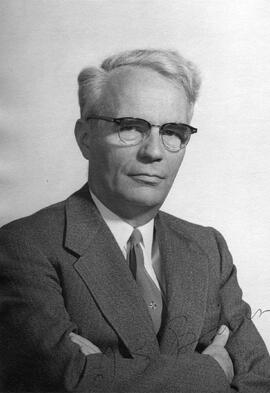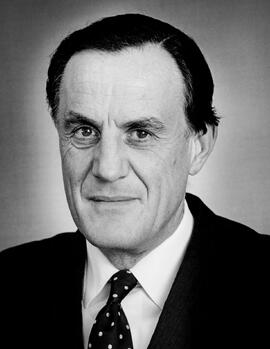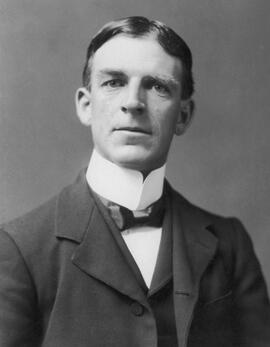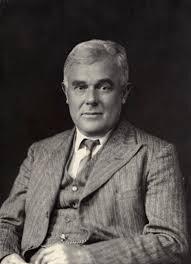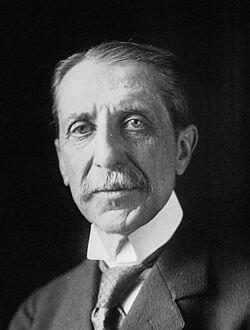
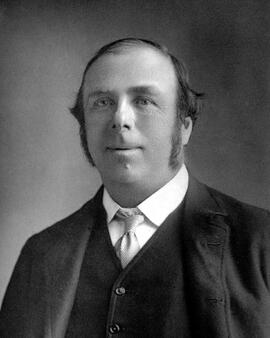
Robert Stawell Ball is an Irish astronomer and mathematician. He was born on July 1, 1840, in Dublin, Ireland, and passed away on November 25, 1913, in Cambridge, England. He was a professor of applied mathematics and mechanics at the Royal College of Science in Dublin. Ball contributed significantly to astronomy and was known for his work in celestial mechanics, geometry, and applied mathematics.
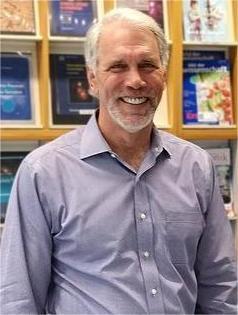
Steven V. W. Beckwith is an American astronomer and astrophysicist best known for his leadership in space-based astronomy. He served as the Director of the Space Telescope Science Institute (STScI), overseeing operations of the Hubble Space Telescope, including the planning and execution of the Hubble Ultra Deep Field - one of the deepest views of the universe ever captured. Beckwith's research interests span galaxy formation, starburst galaxies, and the early universe. He has held academic and administrative positions at leading institutions, including the University of California system, where he was Vice President for Research and Graduate Studies. Beckwith has made significant contributions to both observational astronomy and science policy.
Adriaan Blaauw (April 12, 1914 – December 1, 2010) was a Dutch astronomer renowned for his research on stellar formation, stellar associations, and the dynamics of high-velocity stars. He played a key role in the development of the European Southern Observatory (ESO) and served as its Director General from 1970 to 1974, overseeing its early growth and infrastructure development. Blaauw was also deeply involved with the International Astronomical Union (IAU), serving as its president from 1976 to 1979, where he worked to foster global cooperation in astronomy. His precise astrometric studies and leadership in observational astronomy significantly advanced understanding of stellar kinematics and the large-scale structure of the Milky Way.
Bartholomeus Jan “Bart” Bok (April 28, 1906 – August 5, 1983) was a Dutch–American astronomer celebrated for his studies of the Milky Way and his popularization of astronomy. He is best known for his work on the structure of our galaxy and for identifying small dark clouds of gas and dust—now called Bok globules—as sites of star formation. Bok served as director of the Mount Stromlo Observatory in Australia (1957–1966) and later as a professor at the University of Arizona. A gifted science communicator, he co-authored influential astronomy textbooks with his wife, Priscilla Fairfield Bok, and was an enthusiastic advocate for public engagement in science. His blend of rigorous research and infectious passion for astronomy left a lasting impact on both the scientific community and the general public. Bok also shared a direct scientific connection with M. K. Vainu Bappu. While Bappu was at Harvard in 1949, he discovered a previously unknown comet. Alongside Bok and fellow astronomer Gordon Newkirk, he calculated its orbit, and the comet was later named the Comet Bappu–Bok–Newkirk in their honor—a collaboration that linked their names permanently in astronomical history.
Ira Sprague Bowen (December 21, 1898 – February 6, 1973) was an American astrophysicist best known for explaining the mysterious green emission lines in the spectra of gaseous nebulae. In the 1920s, he demonstrated that these lines were due not to a hypothetical element “nebulium,” as previously thought, but to forbidden transitions in doubly ionized oxygen—an important breakthrough in astrophysics and spectroscopy. Bowen served as director of the Mount Wilson and Palomar Observatories from 1948 to 1964, during which time he oversaw the completion and early operation of the 200-inch Hale Telescope at Palomar, then the largest in the world. His leadership, technical skill in instrumentation, and pioneering spectroscopic research left a lasting mark on observational astronomy.
Robert Hanbury Brown (31 August 1916 – 16 January 2002) was a British physicist and radio astronomer best known for his pioneering work in interferometry. Initially contributing to radar development during World War II, he later became a key figure in post-war radio astronomy. Hanbury Brown developed the intensity interferometer, a novel technique for measuring stellar diameters, which he implemented at the University of Sydney’s Narrabri Observatory in Australia. His work significantly advanced observational astrophysics, and he was also noted for his engaging science writing and public outreach.
Leon Campbell (March 9, 1881 – November 10, 1951) was an American astronomer best known for his work on variable stars. He spent most of his career at the Harvard College Observatory, where he served as the American Association of Variable Star Observers’ (AAVSO) Recorder for over three decades. Campbell compiled and analyzed vast amounts of observational data from amateur and professional astronomers, helping to establish standardized methods for variable star observation. His meticulous record-keeping and dedication significantly expanded knowledge of stellar variability and fostered collaboration between the professional and amateur astronomy communities.
William Wallace Campbell (April 11, 1862 – June 14, 1938) was an American astronomer renowned for his spectroscopic studies of stars and for leading eclipse expeditions. He served as the director of the Lick Observatory from 1901 to 1930, where he advanced the use of spectroscopy to measure stellar radial velocities, contributing to the understanding of stellar motions and binary systems. Campbell also directed several important solar eclipse expeditions, including the 1922 observation in Australia that provided strong confirmation of Einstein’s general theory of relativity. Later, he became president of the University of California (1923–1930) and of the International Astronomical Union (1925–1935).
Philip Herbert Cowell (1870–1949) was a British astronomer and mathematician noted for his precision work in celestial mechanics, particularly the computation of planetary and cometary orbits. Educated at Trinity College, Cambridge, he joined the Royal Greenwich Observatory in 1896, where he eventually became Chief Assistant. Cowell is best known for his detailed calculations of Halley’s Comet’s orbit, working with Andrew Claude de la Cherois Crommelin to successfully predict its 1910 return with unprecedented accuracy. His work extended to lunar theory, the motions of minor planets, and improvements in astronomical constants. A fellow of the Royal Society, Cowell’s meticulous computational methods significantly advanced the accuracy of astronomical ephemerides in the early 20th century.
Aymar Eugene de La Baume Pluvinel (1860–1938) was a French astronomer noted for his pioneering work in astrophotography and spectroheliography. Educated at the École Polytechnique, he became a central figure in France’s late 19th- and early 20th-century astronomical expeditions, particularly those aimed at observing total solar eclipses. Pluvinel made significant advances in photographing the solar corona and prominences, and he collaborated with fellow astronomers to improve spectrographic techniques for studying the Sun’s atmosphere. He was actively involved in the French eclipse expeditions to the Caribbean, Spain, and North Africa, producing some of the earliest high-quality images of solar phenomena.