
Showing 35 results

Authority record
Eddington, Arthur Stanley
Person · 1882 - 1944

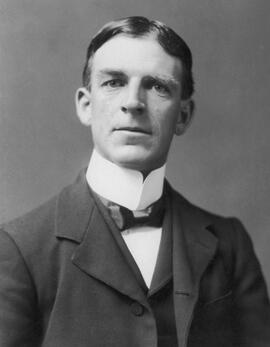
Arthur Stanley Eddington (28 December 1882 – 22 November 1944) was a British astronomer, physicist, and mathematician, best known for his work on the theory of relativity and stellar structure. He provided one of the first experimental confirmations of Einstein’s general theory of relativity during the 1919 solar eclipse expedition, where he observed the bending of starlight by the Sun’s gravity. Eddington also developed the Eddington limit, defining the balance between radiation pressure and gravitational pull in stars, and authored influential works such as The Internal Constitution of the Stars. A Quaker by faith, he was an advocate of international scientific cooperation, even during wartime, and played a major role in popularizing complex scientific concepts for the public.
Dopita, Michael Andrew
Person · 1946 - 2018

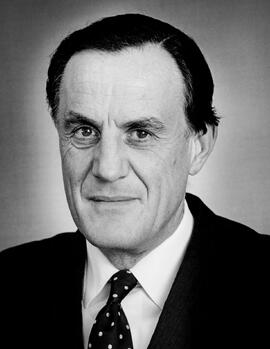
Michael Andrew Dopita is an Australian astronomer known for his research in extragalactic astronomy, astrophysical spectroscopy, and the study of the interstellar medium and active galactic nuclei. He has been affiliated with institutions such as the Australian National University’s Research School of Astronomy and Astrophysics, where he served as a professor. Dopita’s work has contributed to understanding the physical processes in galaxies, including star formation, supernova remnants, and the chemical evolution of the universe. He has also been involved in developing theoretical models and diagnostic tools for interpreting astronomical spectra. Dopita was the 1983 winner of the Pawsey medal.

Delporte, Eugene Joseph
Person · 1882 - 1955

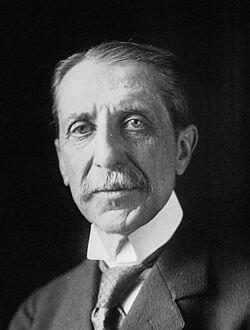
Eugène Joseph Delporte (10 January 1882 – 19 October 1955) was a Belgian astronomer based at the Royal Observatory of Belgium, well known for his contributions to asteroid discovery and for his role in defining modern constellation boundaries. Over his career, he discovered 66 asteroids, including notable ones such as 1221 Amor, the first of the Amor group of near-Earth asteroids, and 2101 Adonis. In 1930, the International Astronomical Union tasked Delporte with formalizing the boundaries of the 88 modern constellations along lines of right ascension and declination for the epoch 1875.0, work which remains the standard today. His precise mapping brought consistency to astronomical charts worldwide. Delporte’s meticulous approach to positional astronomy and his asteroid discoveries made him an important figure in 20th-century observational astronomy.

de Pontecoulant, G.
Person · 1795 - 1874

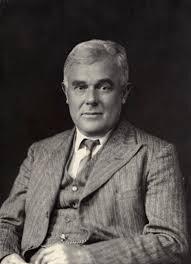
Philippe Gustave le Doulcet, Comte de Pontécoulant (1795–1874) was a French astronomer and mathematician best known for his extensive theoretical work on celestial mechanics. Born into an aristocratic family, he studied at the École Polytechnique in Paris, where he developed a strong foundation in mathematics and physics. Pontécoulant authored the multi-volume Théorie Analytique du Système du Monde (1829–1846), which elaborated and extended the work of Laplace, offering detailed mathematical treatments of planetary motions, lunar theory, and perturbations. His calculations and analytical methods contributed to more precise ephemerides and a deeper understanding of gravitational interactions in the Solar System.

Person · 1860 - 1938

Aymar Eugene de La Baume Pluvinel (1860–1938) was a French astronomer noted for his pioneering work in astrophotography and spectroheliography. Educated at the École Polytechnique, he became a central figure in France’s late 19th- and early 20th-century astronomical expeditions, particularly those aimed at observing total solar eclipses. Pluvinel made significant advances in photographing the solar corona and prominences, and he collaborated with fellow astronomers to improve spectrographic techniques for studying the Sun’s atmosphere. He was actively involved in the French eclipse expeditions to the Caribbean, Spain, and North Africa, producing some of the earliest high-quality images of solar phenomena.

Cowell, Philip Herbert
Person · 1870 - 1949

Philip Herbert Cowell (1870–1949) was a British astronomer and mathematician noted for his precision work in celestial mechanics, particularly the computation of planetary and cometary orbits. Educated at Trinity College, Cambridge, he joined the Royal Greenwich Observatory in 1896, where he eventually became Chief Assistant. Cowell is best known for his detailed calculations of Halley’s Comet’s orbit, working with Andrew Claude de la Cherois Crommelin to successfully predict its 1910 return with unprecedented accuracy. His work extended to lunar theory, the motions of minor planets, and improvements in astronomical constants. A fellow of the Royal Society, Cowell’s meticulous computational methods significantly advanced the accuracy of astronomical ephemerides in the early 20th century.

Campbell, William Wallace
Person · 1862 - 1938

William Wallace Campbell (April 11, 1862 – June 14, 1938) was an American astronomer renowned for his spectroscopic studies of stars and for leading eclipse expeditions. He served as the director of the Lick Observatory from 1901 to 1930, where he advanced the use of spectroscopy to measure stellar radial velocities, contributing to the understanding of stellar motions and binary systems. Campbell also directed several important solar eclipse expeditions, including the 1922 observation in Australia that provided strong confirmation of Einstein’s general theory of relativity. Later, he became president of the University of California (1923–1930) and of the International Astronomical Union (1925–1935).

Campbell, Leon
Person · 1881 - 1951

Leon Campbell (March 9, 1881 – November 10, 1951) was an American astronomer best known for his work on variable stars. He spent most of his career at the Harvard College Observatory, where he served as the American Association of Variable Star Observers’ (AAVSO) Recorder for over three decades. Campbell compiled and analyzed vast amounts of observational data from amateur and professional astronomers, helping to establish standardized methods for variable star observation. His meticulous record-keeping and dedication significantly expanded knowledge of stellar variability and fostered collaboration between the professional and amateur astronomy communities.

Brown, Robert Hanbury
Person · 1916 - 2002

Robert Hanbury Brown (31 August 1916 – 16 January 2002) was a British physicist and radio astronomer best known for his pioneering work in interferometry. Initially contributing to radar development during World War II, he later became a key figure in post-war radio astronomy. Hanbury Brown developed the intensity interferometer, a novel technique for measuring stellar diameters, which he implemented at the University of Sydney’s Narrabri Observatory in Australia. His work significantly advanced observational astrophysics, and he was also noted for his engaging science writing and public outreach.