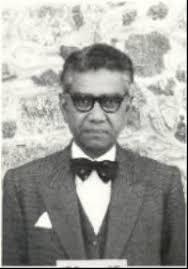
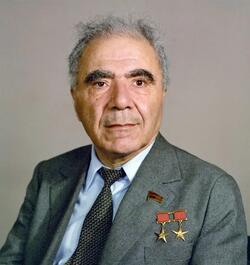
Viktor Ambartsumian (1908–1996) was a pioneering Armenian astrophysicist renowned for his groundbreaking work in theoretical astrophysics and cosmology. He is best known for discovering the existence of stellar associations, which revolutionised understanding of star formation. Ambartsumian also challenged the then-prevailing notion of a static universe, advocating for dynamic and evolving astronomical systems. As the founder of the Byurakan Astrophysical Observatory in Armenia, he played a crucial role in developing astrophysics in the Soviet Union. His influence extended globally through his leadership as President of the International Astronomical Union (1961–1964).
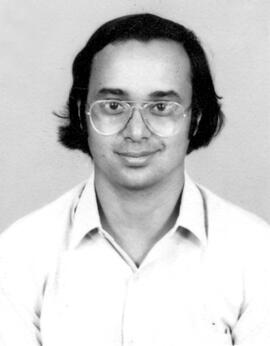
Prof. Bhaskar Datta (1949–1999) was a distinguished astrophysicist associated with the Indian Institute of Astrophysics, known for his expertise in the study of neutron stars, compact stellar objects, and high-energy astrophysics. Over his career, he contributed significantly to understanding the structure, stability, and evolution of rotating neutron stars, as well as their astrophysical implications. His research, often published in collaboration with leading scientists in India and abroad, advanced theoretical models in relativistic astrophysics and dense matter physics. Prof. Datta was deeply respected for his rigorous scientific approach and dedication to mentoring young researchers. His untimely passing on 3 December 1999, at the age of 50, was regarded as a major loss to the Indian astronomical community, and he was remembered with tributes in the Bulletin of the Astronomical Society of India for his scholarly contributions and inspiring presence in the field.
Prof. Dipankar Bhattacharya is an eminent Indian astrophysicist known for his research on neutron stars, supernova remnants, and high-energy cosmic phenomena. He earned his Ph.D. from the Indian Institute of Science in 1988 and worked at the Raman Research Institute (1987–2007), with post-doctoral stints in Amsterdam and California. Later, he joined IUCAA, Pune, and in 2022 became the Sunanda & Santimay Basu Chair in Astrophysics at Ashoka University. He played a leading role in India’s AstroSat mission as chair of its Science Working Group. A fellow of the Indian Academy of Sciences and the National Academy of Sciences, he has received awards including the M.K. Vainu Bappu Gold Medal and the C.V. Raman Award for Space Science. His work continues to shape India’s space astronomy research and missions.
Jagadish Chandra Bhattacharyya (1930 – 2012 ) was an Indian professor well known for his contributions in experimental astrophysics. He became the director of the Indian Institute of Astrophysics in 1982. In 1971 he discovered a thin atmosphere around Ganymede, a satellite of Jupiter. For this he used ground-based, optical telescope at Kavalur, Tamil Nadu, India. In 1977 he discovered an extended ring system around Uranus using lunar an Occultation technique. The Voyager mission later confirmed his discovery.
Subrahmanyan Chandrasekhar FRS (1910 – 1995) was an Indian-American theoretical physicist who spent his professional life in the United States. He shared the 1983 Nobel Prize for Physics with William A. Fowler for "...theoretical studies of the physical processes of importance to the structure and evolution of the stars". His mathematical treatment of stellar evolution yielded many of the current theoretical models of the later evolutionary stages of massive stars and black holes. He was on the faculty at Chicago from 1937 until his death in 1995 at the age of 84, and was the Morton D. Hull Distinguished Service Professor of Theoretical Astrophysics.
Ramanath Cowsik is an Indian astrophysicist renowned for his contributions to cosmic ray physics, neutrino astronomy, and high-energy astrophysics. He is particularly known for the Cowsik–McClelland limit, which placed important constraints on the mass of neutrinos, influencing particle physics and cosmology. Cowsik has also worked extensively on cosmic gamma-ray sources, dark matter, and the origin of cosmic rays. Over his career, he has held prominent academic and research positions, including serving as Director of the Indian Institute of Astrophysics, Bengaluru.
Anil Kumar Das (1902–1961) was an eminent Indian astrophysicist who served as the Director of the Indian Institute of Astrophysics (IIA) and was a key figure in the development of solar and stellar astronomy in India. Educated at Patna University and later at Imperial College London, he specialized in astrophysical spectroscopy. Before joining IIA, he worked at the Kodaikanal Observatory, where he carried out significant research on the solar spectrum, prominences, and sunspots. As Director, Das strengthened observational programs, modernized instrumentation, and encouraged research in both solar and stellar astrophysics.
Badanaval Venkatasubba Sreekantan (30 June 1925- 27 October 2019) was an Indian high-energy astrophysicist and a former associate of Homi J. Bhabha at the Tata Institute of Fundamental Research (TIFR). He was also a Dr. S. Radhakrishnan Visiting Professor at the National Institute of Advanced Studies, Bangalore.
Raghunathan Srianand (born February 1, 1969) is an Indian cosmologist, astrophysicist and a scientist at the Inter-University Centre for Astronomy and Astrophysics (IUCAA) Known for his research on redshift evolution on the cosmic microwave background radiation, Srianand is a member of the International Astronomical Union and the Perimeter Institute for Theoretical Physics.